
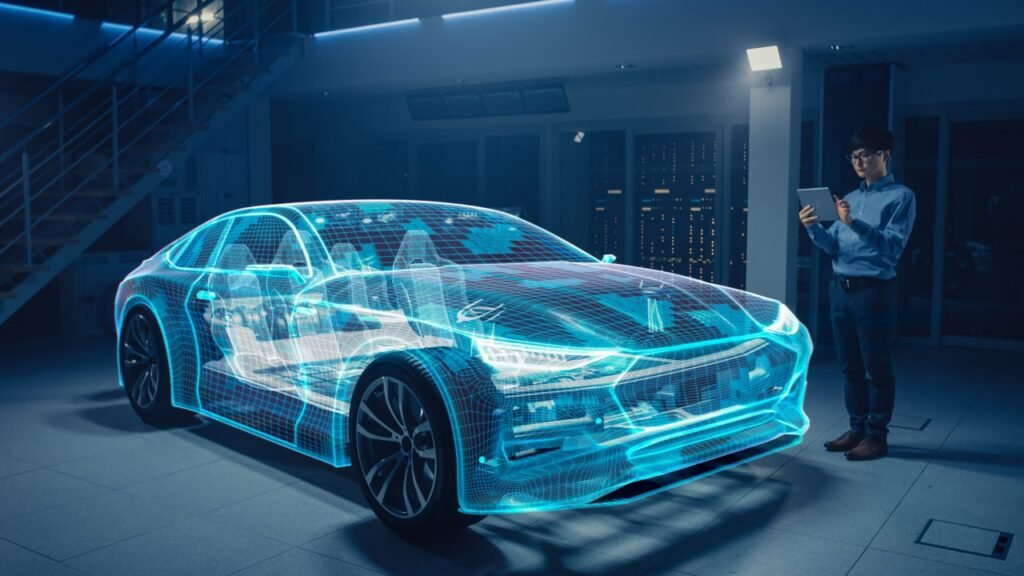
The automotive world is experiencing the most substantial change since Henry Ford industrialized manufacturing a century ago. It’s important that the current transformation is triggered not only by extensive technology development but also by social demand. It appears that our future will be all about accessible mobility: mobility solutions will be more flexible, individualized, and compatible. Let’s consider what innovations are driving this new automotive revolution.
An Overview of the Latest Automotive Industry Trends
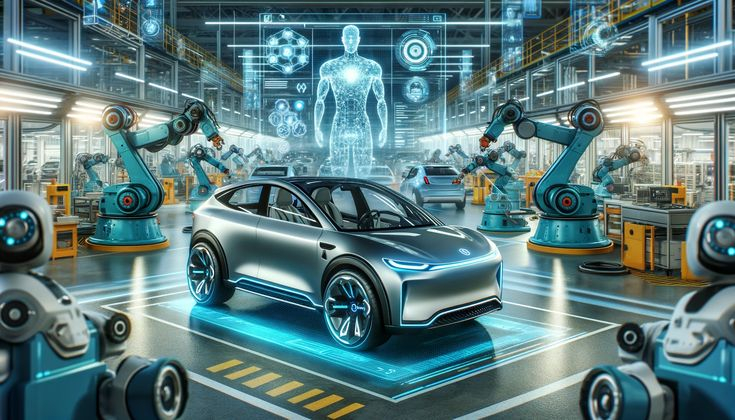
The present-day automotive industry is affected by innovative ideas and is ready to transform and evolve rapidly. Current automotive trends are encouraging automotive manufacturers to offer consumers much more than a metal box on four wheels. Whereas for the past 100 years, carmakers were largely focused on enhancing manufacturing to become more efficient at scale, the future is about redefining the role of the vehicle—now it’s rather a smartphone or computer on wheels.
New technology in the automotive industry opens up new opportunities. AI, additive manufacturing, the Internet of Things, and 5G have become sources of product innovation and manufacturing efficiency, which in turn has led to revolutionary changes in customer experience. Finally, automotive manufacturers are increasingly adopting PMO software to standardize the execution of complex projects with globally distributed teams and ensure compliance with industry standards.
In recent years, the automotive industry has been affected by the following trends:
- Electrification,
- Self-driving cars,
- Connectivity,
- Sustainability,
- Mobility-as-a-Service,
- Implementation of advanced safety features.
These tendencies are long-term and are expected to continue shaping the auto industry in the near future. In the next section, we’ll explore these and other automotive sector trends in more detail, and see how they will evolve in 2026.
Future Trends in the Automotive Industry: 2026 Outlook
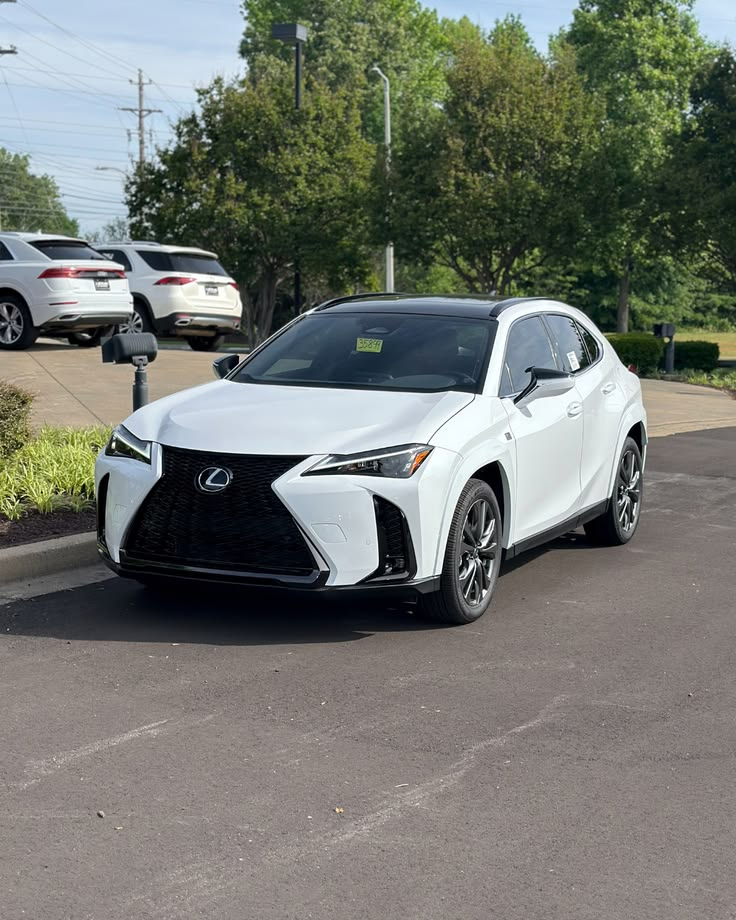
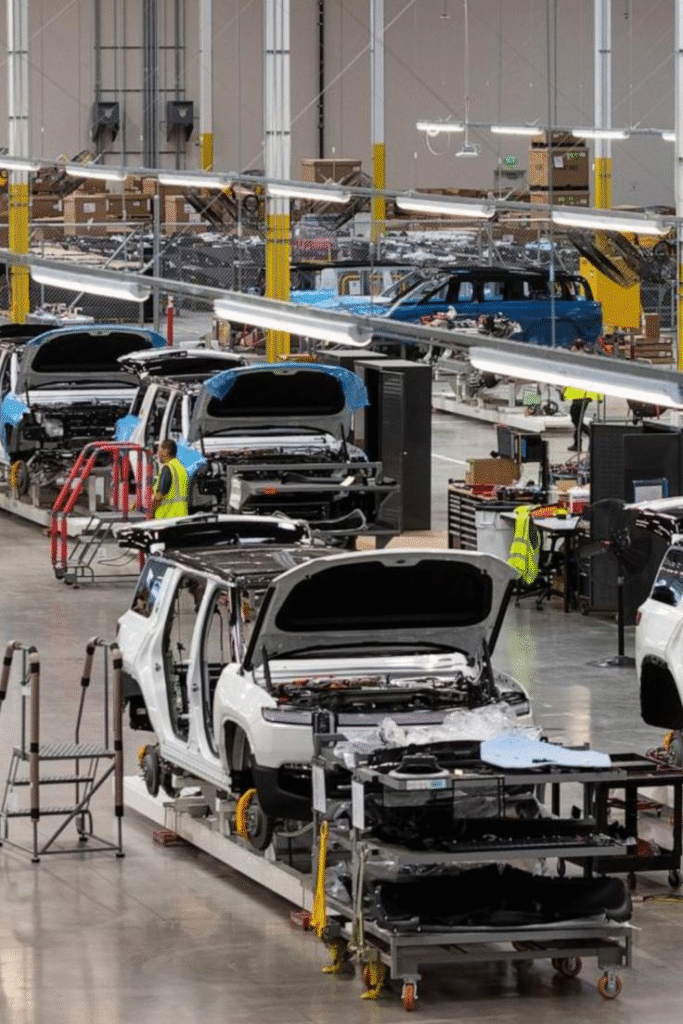
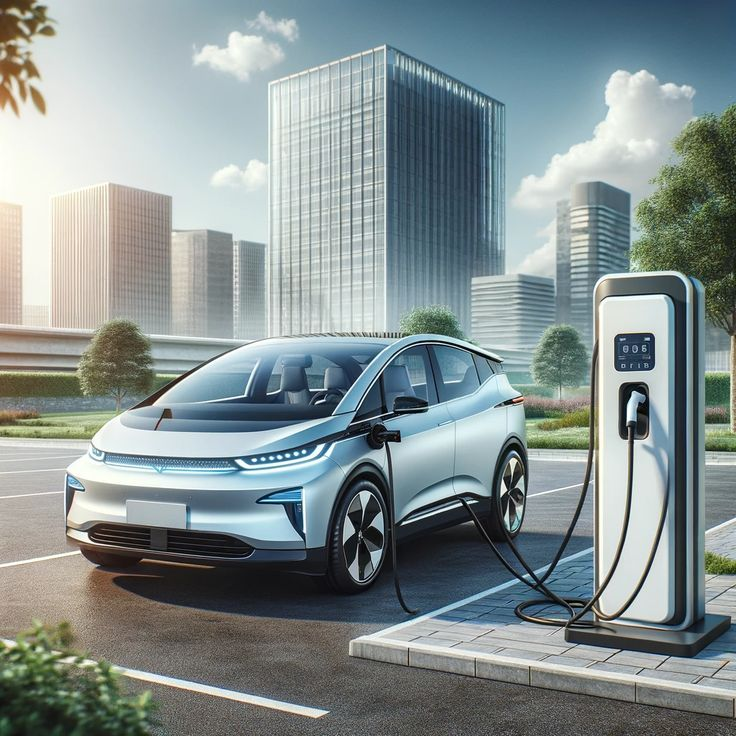
In 2026, electrification and software integration will have an essential impact on the automotive industry. We expect to see the following automobile trends next year.
Electric Cars.
In recent years, the worldwide shift to electric cars has been one of the most prominent trends in automobile industry. Environmental factors have driven the growth of zero-emission vehicle technology, and the popularity of cleaner and more environmentally friendly electric vehicles (EVs) and hybrid electric vehicles (HEVs) has increased. The battery technology and charging infrastructure required for electric vehicles are also evolving—for example, lithium-ion batteries that have certain limitations can now be replaced by solid-state batteries that have higher energy density, are safer, more stable, and cost-effective. [1]
Software-Defined Vehicles.
Software-defined vehicles are those that use software to conduct all operations (braking, driving, steering, providing infotainment, etc.). This software should be regularly updated to let users take advantage of the latest technological advancements and enhance vehicle performance. This trend is gaining traction in 2026: at the recent Consumer Electronics Show, the event that showcases technological innovations across industries, software-defined vehicles were in the limelight. This means that automotive manufacturers will be producing more SDVs in the years ahead. For example, Honda is going to partner with Amazon Web Services to improve data collection and software updates and in such a way speed up the transition to SDVs. [9] The shift to software-defined vehicles requires automotive manufacturers to rethink their manufacturing schedules, and this is where capacity planning software helps them ensure that required resources are available when needed.
Self-Driving Vehicles.
Innovative manufacturers take considerable interest in the potential of autonomous driving technology since it opens new opportunities for business growth. Up-to-date, autonomous vehicles are in the early stage of development: among the 6 levels of driving automation, there are only Level 3 (conditional automation) and some Level 4 (high driving automation) vehicles available in some regions. [3].
Despite the fact that fully autonomous driving is at least several years away from the present, in 2026 and beyond, this technology is expected to be actively developed and tested, and the number of autonomous cars on roads will increase. [8]
Alternative Fuels.
This is one of the new trends in automotive industry, which is to some extent in conflict with electrification. However, there are still a great number of fuel-driven cars, and despite the shift to producing electric vehicles, some car manufacturers don’t want to use batteries in their automobiles for some reason. So, the so-called e-fuels become a greener alternative to traditional fuel, which is also used beyond the automotive industry. E-fuels embrace e-kerosene, e-methane, or e-methanol which are produced as a result of synthesizing CO2 emissions and using renewable CO2-free electricity. Currently, despite their earlier ban, the European Commission has agreed to allow the selling of cars running on e-fuels after 2035, but on condition that they will have no climate impact. So, in 2026, we expect to see further developments in the area along with increased production of alternative fuels and testing them on the roads.
Automotive Supply Chain Issues.
The automotive industry is one of the most severely affected by supply chain disruptions. Currently, its greatest challenge is uncertainty and instability, which are expected to persist this year. This is explained by several factors.
- Talent shortages: automotive manufacturers suffer from high employee turnover, which continues to decline;
- The shift to electric vehicles and incorporation of advanced features in vehicles: they cause a gap between the increased demand for specific components (semiconductors, batteries) and the available supply;
- Reliance on global supply chains: the COVID-19 pandemic has revealed their vulnerability and a number of auto manufacturers are relocating their production plants;
- Geopolitical tensions: military conflicts in some regions of the world also contribute to intensifying supply chain challenges.
Toyota Unveils New Technology That Will Change the Future of Cars
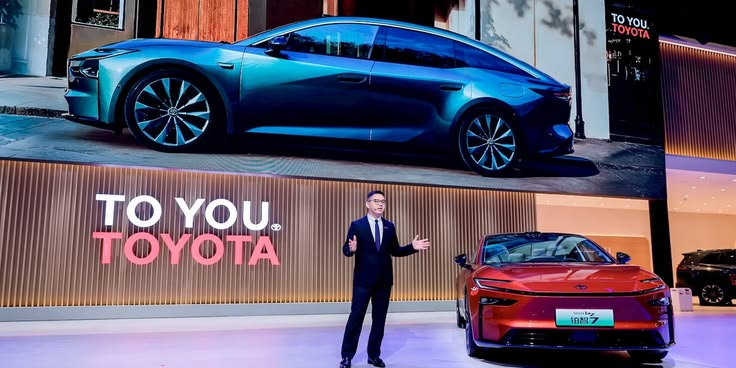
Toyota City, Japan, June 13, 2023―Toyota Motor Corporation (Toyota) recently held a technical briefing session, “Toyota Technical Workshop,” under the theme “Let’s Change the Future of Cars” and announced a variety of new technologies that will support its transformation into a mobility company.
Hiroki Nakajima, Executive Vice President and Chief Technology Officer, explained Toyota’s technology strategy and the direction of future car manufacturing. In addition, he spoke on specific and diverse technologies, including concepts under development, which will help achieve the vision and policies that have been communicated so far. Also speaking were Takero Kato, who has been appointed president of the newly established BEV Factory, and Mitsumasa Yamagata, who is scheduled to be appointed president of the Hydrogen Factory to be launched in July. They elaborated on their respective strategies for the battery EV and hydrogen businesses.
How Does the Dual-Track Strategy Position the Group for Competition?
In March, Hyundai Motor Group announced a collaboration strategy with NVIDIA, introducing a dual-track approach that combines the rapid deployment of proven autonomous driving technologies with the development of proprietary AI capabilities.
Atria AI for Technology Independence and Long-Term Capability
In parallel, the AVE Division and 42dot are continuing to advance Atria AI, a proprietary end-to-end (E2E) autonomous driving system jointly developed by the two organizations. The teams operate under an integrated development framework.
• Production of Atria AI-powered Level 2++ vehicles targeted for the second half of 2029
• Phased progression of autonomous driving capabilities based on real-world driving data collected from production vehicles
This dual-track strategy enables the Group to deliver advanced capability to customers in the near-term while building sustainable technology advantage for the future.
How Does the Data Flywheel Accelerate Learning and Capability Advancement?

The Data Flywheel operates as a virtuous cycle in which data collected from vehicles is used to train and validate AI models, with improved models subsequently deployed back to vehicles to generate new data. The Group also benefits from significant advantages at the starting point of the Data Flywheel: data acquisition.
Data Acquisition at Global Scale
Hyundai Motor and Kia sell more than 7 million vehicles annually across approximately 190 countries and regions worldwide. This global production footprint provides a foundational advantage for autonomous driving data collection. Currently, the Group operates approximately 40 dedicated data collection vehicles around the clock to gather driving data. The collected datasets include not only routine driving scenarios, but also a wide range of real-world edge cases:
• Road construction zones and infrastructure variations
• Severe weather conditions
• Abrupt lane changes and emergency maneuvers
• Parked vehicles on side streets and narrow roads
• Complex urban traffic dynamics
FAQ’s
1. What are the biggest automotive innovations in 2026?
Major innovations include advanced driver-assistance systems, connected vehicles, electric powertrains, AI-powered features, and improved battery technologies.
2. How is AI changing the automotive industry?
AI is being used for driver assistance, predictive maintenance, navigation, voice controls, personalization, and vehicle safety.
3. What are connected cars?
Connected cars use internet and wireless technologies to communicate with smartphones, infrastructure, cloud services, and other vehicles.
4. How are electric vehicles changing driving?
Electric vehicles are encouraging improvements in battery range, charging technology, energy efficiency, and software-based vehicle features.
5. What is autonomous driving technology?
Autonomous driving technology uses sensors, cameras, software, and computing systems to assist with or automate certain driving tasks.