
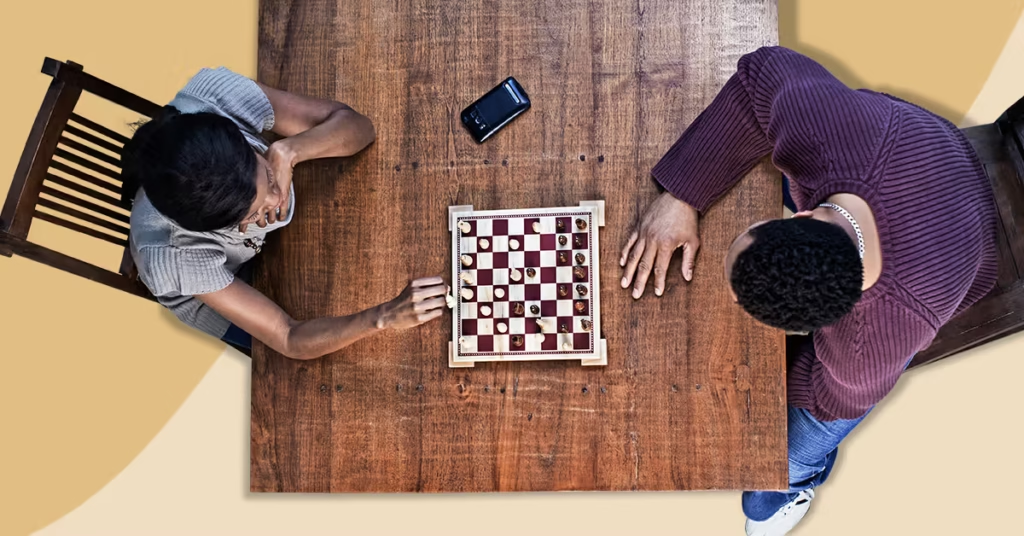
In our modern society where information circulates at a dizzying speed, keeping our brain in shape becomes a major issue for our well-being and personal development. Puzzle games represent a playful and scientifically proven approach to stimulate our cognitive abilities, strengthen our memory, and develop our mental agility.
Whether you are a student looking to optimize your academic performance, a professional wishing to maintain your intellectual sharpness, or a senior eager to preserve your cognitive abilities, puzzle games offer an accessible and enjoyable solution to train your brain.
What Are Puzzle Games?
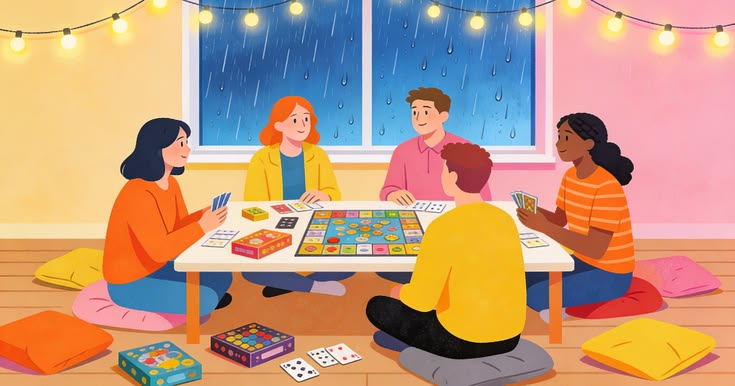
At their core, puzzle games are any games that test your problem-solving skills, logic, pattern recognition, or word knowledge. Unlike action games that rely on reflexes, puzzle games reward thinking, planning, and sometimes a little patience. They can be as simple as fitting shapes into holes or as complex as unraveling a multi-step logic mystery.
The beauty of the genre is its diversity. Whether you have five minutes on a bus or a lazy Sunday afternoon, there’s a puzzle game perfectly sized for your brain and your schedule.
The Best Puzzle Games to Play in 2026

Ready to give your brain a workout? Here are the top puzzle games across different categories, handpicked for their quality and addictiveness.
1. Monument Valley 3 – A Visual and Spatial Masterpiece
This is not just a game; it’s a work of art. Monument Valley 3 continues the series’ tradition of impossible geometry and serene, mind-bending levels. You guide a character through optical illusions and architectural puzzles that feel like walking through an Escher painting. A must-play for fans of aesthetic puzzle games.
2. Candy Crush Saga – The Match-3 Icon
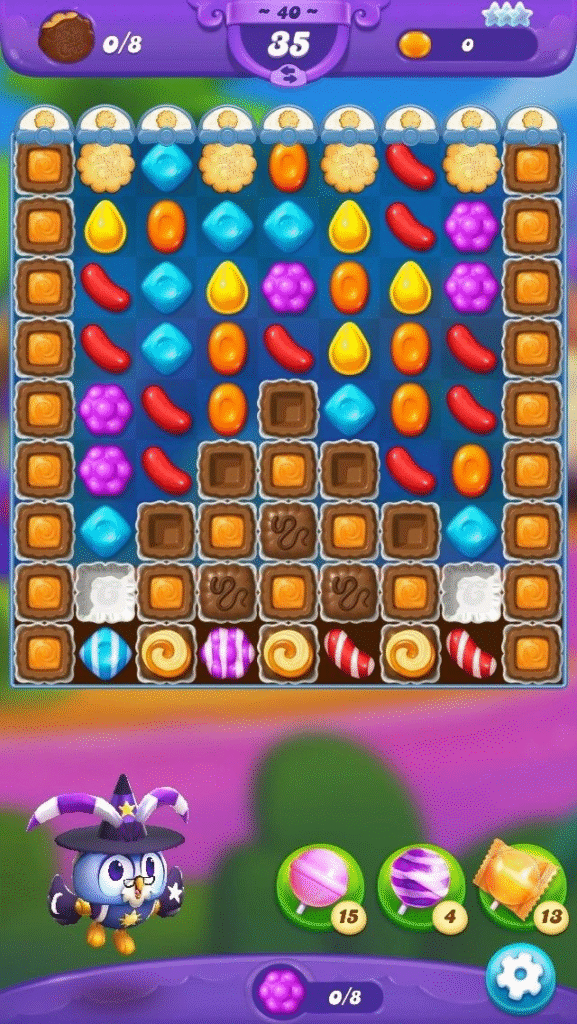
No list of puzzle games would be complete without the king of match-3 games. With thousands of levels and constant updates, Candy Crush Saga remains the go-to choice for quick, satisfying puzzle sessions. It’s the perfect entry point if you’re new to the genre.
3. The Room: Old Sins – Tactile Mystery Puzzles
If you love intricate, hands-on puzzles wrapped in a mysterious atmosphere, The Room: Old Sins is unbeatable. You manipulate elaborate 3D objects, uncover hidden mechanisms, and piece together a dark story. It’s one of the best logic puzzle experiences on mobile.
4. Wordscapes – Relaxing Word Puzzles
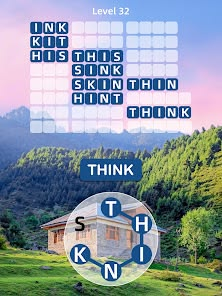
Wordscapes combines crossword-style clues with a soothing nature theme. It’s a fantastic word puzzle game that eases you into a flow state, perfect for winding down before bed. With over 6,000 levels, it will keep your vocabulary sharp for months.
5. Baba Is You – The Rule-Bending Genius
For those who want a true brain challenge, Baba Is You turns the rules of the game itself into puzzle pieces. You push words around to change how the game works—for example, making “Wall Is Stop” become “Wall Is You.” It’s one of the most innovative puzzle games ever made.
Game Breakdowns


Order of the Sinking Star
Heavyweight alert. Jonathan Blow (Braid, The Witness) is back with his first massive puzzle opus in years, and it’s exactly as brain-shattering as you’d expect. You control multiple characters with distinct abilities across a sprawling grid-world where block-pushing variations and mirror-reflection mechanics stack into cascading, interconnected conundrums. Hundreds of puzzles, each one a key to the next. This isn’t a weekend fling; it’s a full-blown intellectual relationship.
Darwin’s Paradox
Ever played as a genius octopus in a retro-futuristic 1950s sci-fi world? No? Well, fix that. This game is dripping with personality and deadpan humor as you slither, squeeze, and grab your way through complex environmental puzzles using real octopus skills: camouflage, tentacle manipulation, and some seriously weird biology. It’s clever, charming, and makes you appreciate cephalopods in a whole new way.
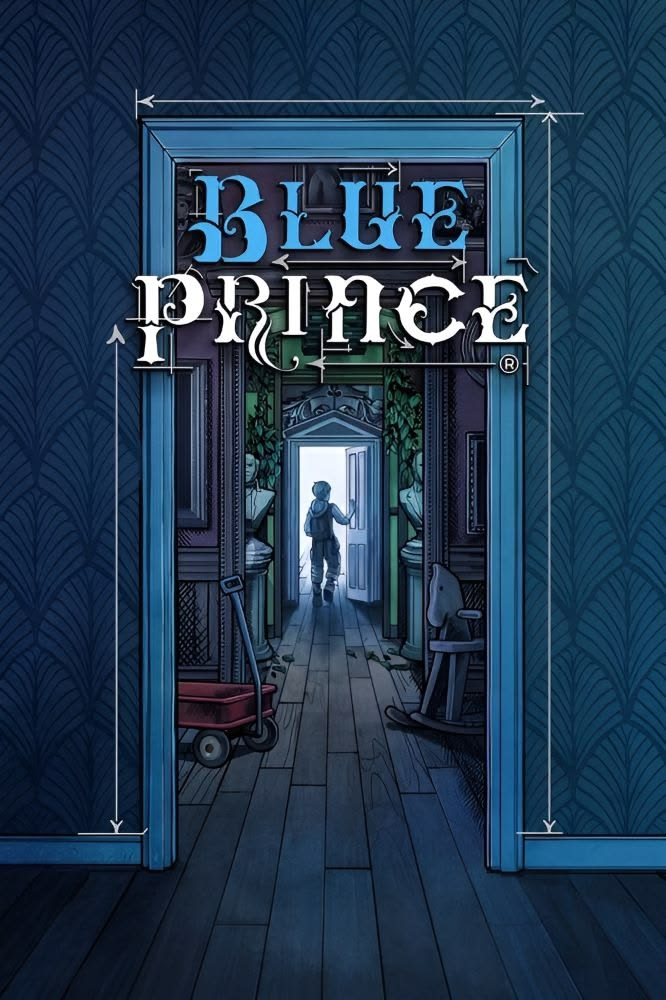
Blue Prince
Roguelike meets estate planning. You’re exploring a sprawling, ever-shifting mansion by literally choosing which room appears next from a deck of blueprints. Each run is unique, and you’ve got a strict step limit before the day resets. It’s part strategy, part spatial reasoning, and completely addictive as you piece together the family’s buried secrets one corridor at a time.
Rise of the Golden Idol
If you haven’t played the original Case of the Golden Idol, fix that immediately—then jump into this direct sequel set in the groovy, grim 1970s. You’re given frozen crime scenes, a pile of witness statements, and a blank deduction panel. Your job? Fill in the blanks to reconstruct exactly who killed whom and why. The art is stylized, the writing is razor-sharp, and the “aha!” moments hit like a truck.
Animal Well
Don’t let the cute pixel art fool you—this Metroidvania-adjacent puzzle game is deeply, deliciously sinister. You explore a sprawling, pitch-black underground labyrinth filled with bizarre wildlife and tools that interact in ways you’d never guess. The puzzles are non-linear, brutally secretive, and layered so deep that the community will be decoding this one for years. Pure atmospheric brilliance.
Lorelei and the Laser Eyes
From the publisher that brought you Cocoon and Kentucky Route Zero comes a surreal, black-and-white head-scratcher that plays like a fever dream inside an art gallery. You’re trapped in a non-linear maze of a hotel, scribbling down codes, dates, and cryptic number puzzles on actual paper (remember that?). It’s retro, weird, unsettling, and absolutely brilliant for anyone who loves taking notes like a detective.
A Brief History of Puzzle Games: From Crosswords to Candy Crush
The roots of puzzle games run deep. The crossword puzzle, born in 1913, is often considered the first modern mass-market brain teaser. Then came the Rubik’s Cube in 1974, which turned spatial reasoning into a global obsession. But it was the digital age that truly exploded the genre.
In 1984, Tetris introduced the world to the addictive power of falling blocks and spatial rotation. It proved that a simple rule—fit shapes together to clear lines—could captivate millions. Fast forward to 2001, and Bejeweled launched the match-3 games craze, which later evolved into Candy Crush Saga, one of the most successful mobile games ever made.
Today, puzzle games span countless subgenres: logic puzzles, physics-based games, word games, hidden object games, and of course, the match-3 juggernaut. The common thread? They all make you think, and they all make you feel smart when you solve them.
The Science-Backed Benefits of Playing Puzzle Games
Why should you make puzzle games a regular part of your routine? The research is compelling.
1. Improved Cognitive Function
Studies suggest that regularly engaging in mentally stimulating activities—like solving puzzles—can improve memory, processing speed, and executive function. Think of brain games as a workout for your mind. Just as lifting weights builds muscle, solving puzzles strengthens neural connections.
2. Stress Relief and Relaxation
There’s a reason so many people reach for a puzzle game after a long day. The focused attention required to solve a puzzle can trigger a state of “flow,” where worries fade into the background. Matching colorful gems or untangling a logic problem gives your brain a break from the chaos of daily life.
3. Dopamine and the Joy of Solving
Every time you complete a level or crack a tough puzzle, your brain releases dopamine—the feel-good neurotransmitter. This creates a positive feedback loop that keeps you engaged and motivated. It’s the same reward system that makes match-3 games so satisfying, but it applies to all puzzle types.
4. Better Problem-Solving Skills
Puzzle games train you to approach problems from different angles. Whether you’re figuring out the best move in Portal or searching for a word in Wordscapes, you’re practicing flexible thinking and strategic planning—skills that transfer to real life.
Visual Puzzles: Development of Spatial Intelligence
Visual puzzles represent a fascinating family of games that stimulate our spatial intelligence and our ability to visualize in three dimensions. From traditional puzzles to Rubik’s Cubes and tangrams, these challenges engage specific cognitive skills often overlooked in our digital daily lives.
These games particularly develop our mental rotation ability, the skill to mentally manipulate objects in space. This skill proves crucial in many professional fields, from architecture to engineering, as well as medicine and sciences.
Training with visual puzzles also enhances our attention to detail and our perseverance in the face of complex challenges. These qualities naturally transfer to other areas of life, strengthening our ability to persevere in the face of obstacles.
Memory Games: Strengthening Memory Abilities
Memory games are a fundamental pillar of cognitive training, specifically targeting our different memory systems. These exercises go far beyond the traditional “Memory” game to encompass a variety of sophisticated activities that challenge our working memory, long-term memory, and visuo-spatial memory.
Working memory, often referred to as the “mental blackboard,” plays a crucial role in our ability to process and manipulate information in real time. Strengthening it through targeted exercises significantly improves our performance in solving complex problems, reading comprehension, and mental calculations.
Modern applications like COCO THINKS and COCO MOVES offer adaptive memory exercises that automatically adjust to the user’s level, thereby optimizing training efficiency while maintaining an appropriate level of challenge.
FAQ’s
1. What are puzzle games?
Puzzle games are games that challenge players to solve problems, recognize patterns, use logic, or complete tasks.
2. What are the best puzzle games in 2026?
The best puzzle games vary by preference, but popular choices include logic, word, matching, strategy, and spatial puzzle games.
3. Can puzzle games improve problem-solving skills?
Puzzle games can encourage logical thinking, pattern recognition, planning, and problem-solving practice.
4. Are puzzle games good for the brain?
They can provide mental stimulation and encourage skills such as memory, attention, reasoning, and problem-solving.
5. What types of puzzle games are available?
Common types include logic puzzles, word games, number puzzles, match-three games, jigsaw puzzles, escape-room games, and spatial challenges.